It is now seven months since Joe Biden took office. During that time, his administration has announced many positions and policies while continuing to work on others. One policy area previous administrations have too often neglected relates to standards, despite the vital role they play in almost all areas of commerce. This neglect has been particularly unfortunate with respect to international trade, as the United States has historically influenced global standards development and adoption more than any other single nation.
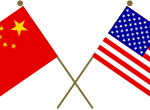
Adopting an enlightened standards policy could greatly advance the national interest in the area of information and communications technology (ICT) standards. And at no time in recent memory has the need to do so been more urgent, as trade tensions with China sustain rather than abate. Absent a change in direction in policy, there is the potential for standards wars between East and West in areas such as 5G technology.
Maintaining a healthy standards development ecosystem domestically is equally important, as standards setting organizations (SSOs) annually create hundreds of standards that are referenced into law, at great savings in time and tax dollars when compared to the costs of drafting regulations within the government.
There are six areas in which standards policy action – and in some cases inaction – by the Biden administration is most urgently needed. They are as follows:
Reduce Uncertainty for BIS Compliance
American companies are barred from disclosing many areas of technology to companies and others added to the “Entity List” maintained by the Bureau of Industry and Security (BIS). Disclosure of technology is an essential element of developing most ICT standards, and Huawei, among many other Chinese companies and universities, was added to the Entity List under the previous administration.
While BIS has issued guidance on two occasions on what processes SSOs must observe in order to permit US companies to participate when Huawei is also present, this guidance has been vague and insufficient. This ambiguity has led to multiple unfortunate consequences: SSOs have struggled to determine what specific changes they must undertake to permit risk-free participation by all; non-US SSO members are understandably unhappy with the diversion and cost of these efforts; and US companies have sometimes felt unable to participate in specific SSOs crucial to their businesses. Some SSOs have even relocated to Europe in protest of these impositions by a single country.
To rectify this situation, the Biden Administration should:
• Give clear guidance on reasonable and appropriate actions an SSO can take to permit participation by both U.S. companies and Entity List companies whose participation is essential to developing the highest quality, most universally adopted ICT standards.
• Abandon the OMB A-119 “voluntary consensus body” compliance benchmark which unfairly forces consortia to adopt fundamental changes to their processes that needlessly add to costs and delay the development of standards.
• Apply these rules to all Entity List companies, and not just Huawei.
• Restore the ability of SSOs to submit business review letters describing proposed process changes for prior approval by BIS, allowing them to take a minimal, rather than an excessively precautionary approach to compliance.
Reduce the Risk of Standards Wars
With the exception of specific treaty obligations, international adoption of standards is entirely voluntary and market driven. Competing standards can, and often have, been used as competitive weapons, both to exclude or burden foreign products or to avoid licensing costs associated with “standards essential patents” (SEPS). While both the US and China are signatories of the World Trade Organization Treaty on Technical Barriers to Trade (TTBT), which bars signatory nations from adopting local standards where suitable global standards have become widely adopted, this did not prevent China from launching its own wireless standard (WAPI) in competition with Wi-Fi a decade and a half ago, alleging that the Wi-Fi standard developed by the IEEE provided insufficient security.
The WAPI standard was encumbered by many SEPS owned by Chinese companies (as, indeed, the competing Wi-Fi standard was encumbered by SEPS owned by Western companies). Licenses to those standards were available only to certain Chinese companies. China also developed its own 4G standard (CDMA) in competition with two Western contenders. With the largest population in the world, China was able to use its competing standards to the benefit of its domestic vendors. It has every incentive to do the same now if trade tensions between the US and China do not lessen.
Significantly, Huawei is recognized as owning more 5G patents than any other company in the world. It is also believed to have been a member of c. 400 SSOs, many of which ejected Huawei or suspended its participation after it was placed on the Entity List. The intellectual property rights (IPR) policies of virtually all of these SSOs require participants to either license their SEPS on “reasonable and non-discriminatory” (RAND) terms, or to disclose them so that an attempt can be made to revise the related standards to avoid infringement. But this obligation only attaches to companies participating in the working groups that create the standards.
Excluding Huawei from participation in SSOs, and therefore from licensing obligations under the IPR policies of those SSOs, gives China the opportunity and the incentive to “weaponize” Huawei 5G patents, a great many of which will inevitably be SEPS under the standards developed by these SSOs. Huawei will be free to demand above-market fees for licenses to these SEPS – or even to withhold licenses entirely.
To avoid this potentially dangerous result, the Biden Administration should recognize that:
• There is near-universal support by US companies for participation by Huawei in 5G standards development.
• Independent of security concerns involving 5G technology, the US is better off when SSOs have access to Huawei technology and Huawei SEPs are bound by SSO RAND licensing obligations.
• China may be nearing a tipping point at which it may believe its interests would be best served by launching multiple competing standards.
Don’t Impose “Democratic Values” on Global SSOs
Beginning this past spring, a series of novel amendments were proposed to draft legislation and policy initiatives. These proposals were based on the concept that global SSOs should be required to incorporate requirements relating to openness, transparency, and consensus into their processes. Sometimes these requirements were referred to as “democratic values.” In some amendments proposed but not ultimately included in the draft United States Innovation and Competition Act of 2021 (originally titled the Endless Frontier Act), the BIS would have been required to add SSOs deemed to be lacking in democratic values to a disfavored list, with vague, threatened consequences to those that participate in their activities. While there is always the potential for a given SSO to be manipulated, and openness and transparency in themselves are laudable, respected SSOs already incorporate those values in processes. But each includes them in a fashion appropriate to its history, industry and membership.
More seriously, virtually all trade relies on the efficient operation of a global infrastructure made up of hundreds of SSOs, participation in which is voluntary, as is compliance with their standards. Each SSO is free to adopt the rules and processes it believes will best serve its goals and members. The system only works because of this flexibility, and because all stakeholders, from the largest companies and nations to the smallest, can participate on an equal basis. If individual nations begin to impose their individual litmus tests for process and governance, there is a very real possibility that this vital system, evolved over almost a century and a half, may collapse.
To reverse this trend, the Biden administration should:
• Recognize the diversity and strength of global SSOs rather than seek unnecessary and harmful rules of uniformity.
• Recognize the existential threat represented by single-nation requirements on the vast network of multinational, voluntary NGOs that is the SSO community.
• Resist calls to impose specific requirements or expectations based on “democratic values” and other specific expectations on SSOs.
• Recognize that US obligations as a signatory to the World Trade Organization TTBT are incompatible with unilaterally re-defining acceptable standards development norms and processes.
Recognize and Promote the Importance of Consortia
Since 1980, more than six hundred SSOs have been formed to develop ICT standards. In many areas of ICT, these organizations produce many more essential standards than the traditional legacy organizations (often referred to as standards development organizations, or SDOs), notably ISO, IEC, the ITU and, in the United States, SDOs accredited by the American National Standards Institute (ANSI). While the governance and processes of these new organizations (most commonly referred to as consortia) are in most respects very similar to those of SDOs, they typically operate on a more streamlined basis than SDOs in order to meet the demands of the fast-moving technology marketplace. US companies have been particularly active in forming consortia, and the standards released by these organizations have enabled the rapid development of myriad products and services in areas such as wireless, AI, “big data,” robotics, and much more.
At the same time, the US government continues to favor the definition mentioned above of “voluntary consensus standards” that originated in the Technology Transfer and Advancement Act of 1995, as further developed in Office of Management and Budget (OMB) Circular A-119. That definition maps to the traditional SDO process rather than the more expedited approach favored by consortia. While there is much to be said for adhering to the voluntary consensus body requirements in the case of health and safety standards that are referenced into law, there is little benefit to burdening the development of ICT standards with all of the same requirements. Indeed, even in the case of government procurement and statutory references, OMB A-119 only expresses an “all other things being equal” preference for voluntary consensus standards over consortium standards, citing more than a dozen examples of factors that may lead to a different standard being chosen.
To avoid needlessly burdening the essential role of consortia in ICT standards development, the Biden administration should:
• Limit the application of the OMB A-119 definition of voluntary consensus standards and standards bodies to their appropriate targets: government procurement and standards referenced into law.
• Not adopt the OMB A-119 as a reference when pursuing other standards policy goals.
• Resist international efforts (e.g., in the US-EU Trade and Technology Council) to embed SDO-derived process requirements into rules and treaties.
Restore the Country’s Reputation in Global Standards Development
In 2001, in reaction to the 9/11 attacks, the US tightened border restrictions. Global SSOs typically have multiple face-to-face meetings, and non-US participants chaffed at being fingerprinted, or having their visa requests denied entirely. These impediments have grown more burdensome for Chinese participants, despite the fact that participation by Chinese technologists in developing open standards and open source software is often highly valued by U.S. participants. Adding Huawei and other Chinese companies to the Entity List, and the disruption to hundreds of SSOs that followed, has increased international exasperation and animosity towards unilateral US requirements. There is today a growing backlash against such impositions, leading to a sense that new SSOs should be organized outside the US.
To reverse this trend, the Biden administration should:
• Avoid and reverse unilateral demands on global SSOs and standards development.
• Work to reestablish its reputation as a team player dedicated to breaking down barriers to trade.
• Recommit to its TTBA obligations and avoid messaging and initiatives that are inconsistent with these obligations.
Support Open Source Software Development
Over the past two decades, open source software (OSS) has become essential to virtually every ICT product and service. An astonishing percentage of essential technologies today are fundamentally based on OSS stacks, from operating systems to telecommunications to much more. Indeed, there is very little proprietary software today that does not incorporate some – and often a great deal – of OSS.
This dramatic evolution in software development practices has occurred with almost no recognition or support by the U.S. government; in contrast, the European Union is highly supportive of OSS, partly with the goal of leveling the competitive playing field for European SMEs. The time has come for Congress and the administration to recognize and support the vast importance and value of OSS to critical infrastructure, the economy, and all other aspects of our technology-based world.
In order to avoid impeding the further benefits of OSS, the Biden administration should:
• Recognize the importance of OSS to the national interest.
• Avoid taking actions that may inadvertently impede the further development and uptake of OSS.
• Increase the uptake of OSS by government agencies, many of which continue to utilize archaic systems.
• Amend OMB A-119 to provide the same encouragement to government personnel to participate in SSO projects and foundations as in SSOs.
The Time for Standards Policy Reform is Now
Each of the recommendations above would fine wide support in the ICT industry, and there would be little or no associated government cost to implement them. The time to act is now.
If you would like to receive an email alert of future blog posts, please complete the sign-up form in the right hand column.
 Last week, the U.S. Department of State released its Agency Strategic Plan for 2026 – 2030. As one would expect, it bears virtually no relation to the longer and more detailed predecessor joint plan of the State Department (and the now largely defunct US AID agency) under the Biden Administration. It’s not surprising, then, that its approach to standards development organizations is meaningfully different as well.
 On December 29, the US Patent and Trademark Office (US{TO)
  Twenty-five years ago, the American National Standards Institute (ANSI) convened a working group of public and private sector representatives to draft the first version of a standards strategy for the United States. After much work, that document was approved. Every five years since then, the United States Standards Strategy (USSS) has been reviewed and updated to ensure that it remains responsive to the opportunities and the challenges of an increasingly volatile and important standards ecosystem.
 Two decades ago, an ad hoc coalition of major companies (mostly acting behind the scenes), open source developers, and technology freedom advocates led an effort to challenge Microsoft for control of the desktop. The weapon at their disposal was the OpenDocument Format (ODF), a new standard that promised to allow documents, spreadsheets and presentations to be traded between competing software programs for the first time. After several heroic years, that quest eventually failed, but a new one may be taking shape today, with its seeds planted in Denmark – or perhaps in Greenland.
